THE PRAGMATICS OF INTENT
For a business owner or top manager considering Vietnam as a strategic direction, the question of logistics extends beyond merely choosing a route or estimating shipping costs. It is a fundamental element of the operational model, directly impacting capital turnover, profitability, and the overall level of business control. The key business objective is to establish a predictable, scalable, and economically efficient supply chain that minimizes risks and ensures a competitive advantage.
A lack of understanding of the logistics process architecture in Vietnam leads to significant delays, unforeseen costs, and a loss of operational control. This can stem from an incorrect assessment of customs procedures, prolonged transit times, or the complexities of internal distribution. Vietnam, with its unique geographical features and developing infrastructure, demands deep analytics and strategic pragmatism from market players. A simple comparison of freight prices is merely a starting point. Far more crucial is evaluating the entire совокупность of regulatory, infrastructure, and operational factors that determine the true cost and delivery times, as well as their impact on the project's overall economics.

THE OPERATIONAL FILTER
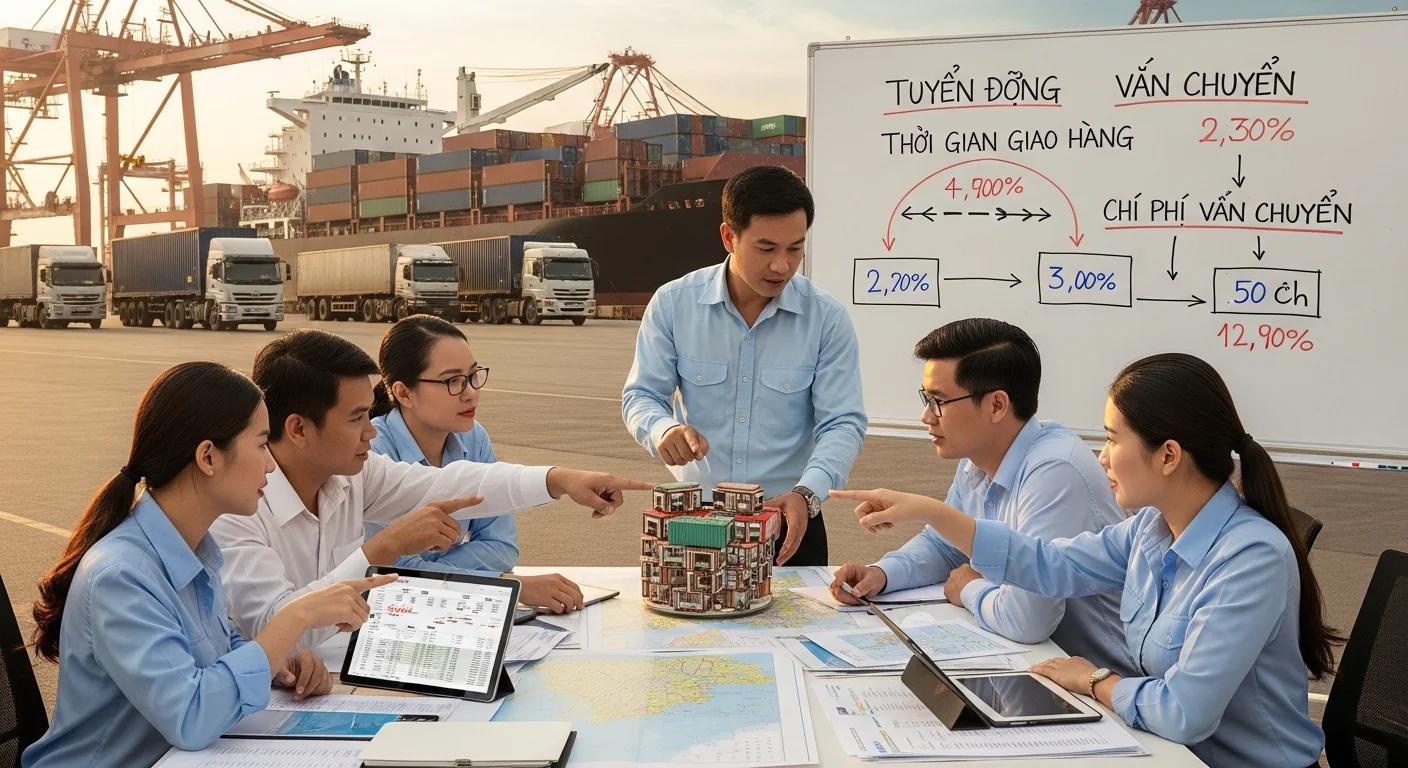
Logistical operations in Vietnam encompass several key stages, each with its own specific characteristics. Major international routes include sea and air freight. Sea container shipments remain the most economical option for large volumes and flexible timelines. The primary transport hubs are the key seaports in the north, central, and south of the country, which facilitate the reception and dispatch of goods from global logistics hubs. Sea delivery times can range from 30 to 45 days, depending on the port of origin and the specific route.
Air freight is utilized for urgent or high-value goods where speed is a critical factor. The country's main international airports serve as entry points. Air delivery times are significantly shorter—from a few days to a week. However, the cost of this type of transport is substantially higher, requiring thorough economic justification.
Customs clearance is a complex process that can be non-linear. It involves submitting declarations, paying customs duties and taxes, and undergoing inspections. Inland logistics, from ports and airports to the end consumer, is a complex operational area with a high cost of error. A fragmented courier infrastructure, especially outside major cities, necessitates careful planning and the selection of reliable local partners. Accounting for regulatory costs and tax obligations at all stages is fundamentally important for determining the final product cost.
THE ECONOMICS OF THE PROCESS
The economic efficiency of the supply chain in Vietnam often erodes due to a number of hidden factors and underestimated risks. The first problem lies in the freezing of working capital. Extended sea delivery times mean that significant amounts of funds can be immobilized for a month or more. This directly impacts financial stability and the ability to scale quickly. The risk of losing operational control over quality and delivery times increases proportionally with the complexity and length of the chain.
The second aspect involves additional costs associated with customs clearance, warehousing, and internal distribution. Incorrect declarations, customs delays, or inefficient inventory management can generate fines, demurrage, and other unplanned expenses that rapidly erode profitability. The problem isn't always sales; it's often about cash collection and optimizing logistics costs.
Furthermore, there is a risk of cargo damage or loss. Insurance is a mandatory measure, but it only compensates for a portion of financial losses, not the lost profit from untimely product sales. Returns management is also a critical point: in Vietnam, this process can be logistically complex and costly, requiring separate consideration in the unit economics of each product.
MODEL AUDIT
Upon entering the Vietnamese market, companies have access to three main logistics organization models, each with its own advantages and disadvantages in terms of control and risks.
1. Utilizing Marketplaces
This model provides simplified market entry by leveraging the platform's ready-made infrastructure and logistics services. It reduces the operational burden on the company. However, this entails the risk of losing operational control over the customer experience and the entire supply chain. The company becomes dependent on the marketplace's terms and fees, which can lead to margin erosion through high commissions and restrictions. Additionally, there is no direct access to analytics and consumer data, complicating strategic planning.
2. Building In-House Logistics
This model offers maximum control over all stages of the supply chain, allowing processes to be optimized for specific business requirements and maintaining a high level of service. It unlocks potential for scalability and creating a competitive advantage. However, building an in-house logistics infrastructure requires significant capital and operational expenditures, deep local expertise, and a long payback period. The company assumes all risks associated with regulatory changes, market fluctuations, and operational errors.
3. Collaborating with a Logistics Partner (3PL)
This model involves outsourcing logistics functions to a specialized company. This provides access to the partner's expertise, infrastructure, and network without significant capital investment. It ensures high flexibility and scalability. However, there is a dependence on the quality of services and the reputation of the partner. Thorough due diligence and selection of a company with proven experience and a transparent reporting system are necessary. The potential loss of some control over the process requires the development of clear SLAs and a monitoring system.
THE SOLUTION ALGORITHM
When deciding on a logistics strategy for Vietnam, a structured approach is recommended, starting with a pilot project and then progressively scaling.
1. Detailed Analysis and Goal Setting
Determine the actual volume and nature of goods, target geographical regions in Vietnam, and required delivery times. Conduct market analysis for competitive advantages that can be achieved through logistics efficiency. Establish clear success metrics for each stage.
2. Choosing the Optimal Model
Assess your risk appetite, available resources, and strategic goals. Based on the analysis, decide between a marketplace, in-house logistics, or a 3PL partner. It is important to consider long-term scaling prospects and the adaptability of the model.
3. Pilot Project
Avoid starting with inflated expectations and a full-scale launch. Organize a pilot delivery of a limited batch of goods along the chosen route, using the most representative conditions. This will help identify hidden problems, test operational processes, and assess real timelines and costs. DDP/DAP delivery terms are preferable at this stage to minimize risks on the buyer's side.
4. Legal Framework and Insurance
Ensure a solid legal foundation for all logistics operations. This includes entering into clear contracts with carriers and partners, obtaining all necessary licenses and permits, and comprehensive cargo insurance against all possible risks. Neglecting this point leads to significant financial and reputational losses.
5. Monitoring and Control System
Develop and implement a system for tracking cargo, monitoring timelines, quality, and actual costs. Regular auditing of the supply chain's efficiency allows for prompt identification and elimination of bottlenecks, as well as cost optimization.
6. Scaling and Optimization
Gradually expand operations using data and experience gained during the pilot phase. Continue to seek ways to optimize routes, reduce costs, and enhance operational efficiency. Logistics is a continuous process of improvement.