THE PRAGMATICS OF INTENT
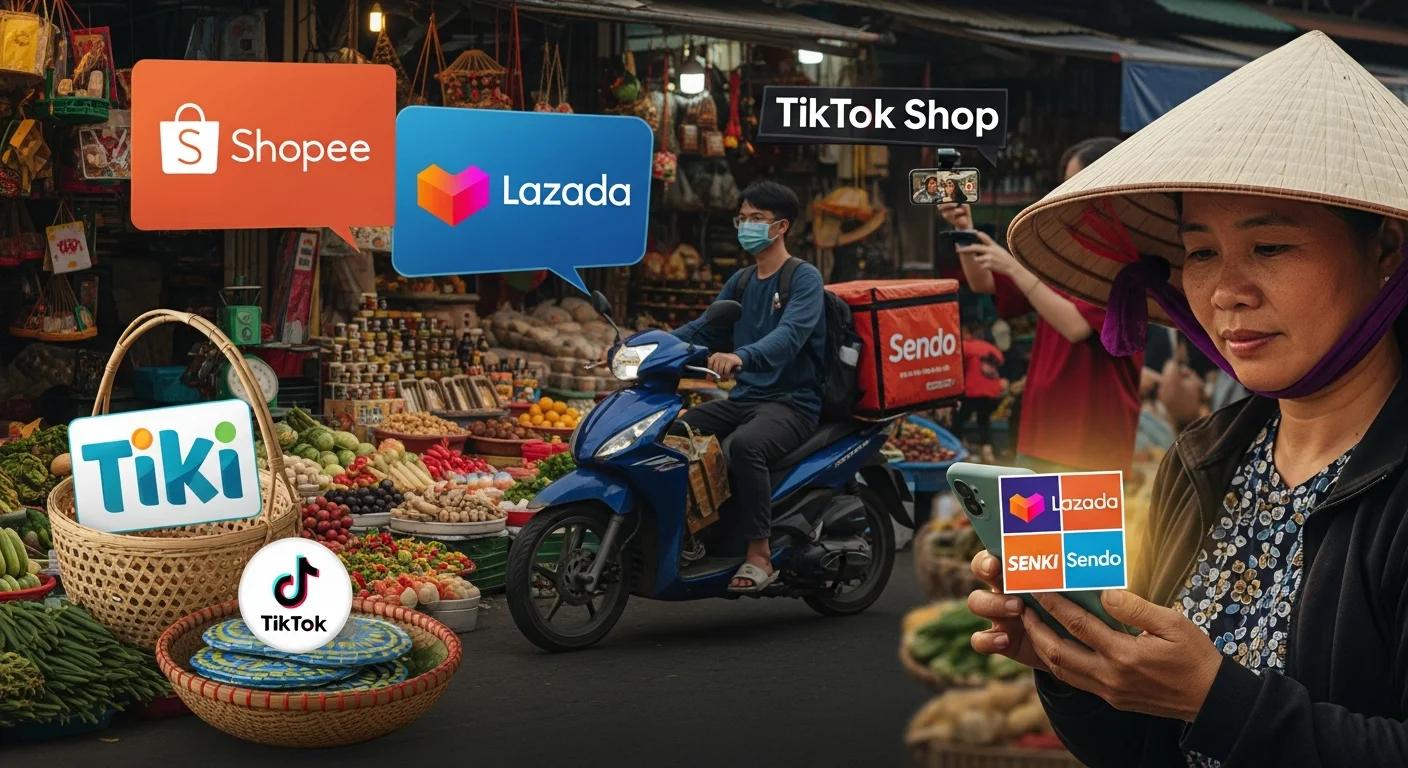
The Vietnamese e-commerce market demonstrates consistent growth, attracting the attention of business owners looking to expand their geographical footprint. However, a simplistic view of this channel as a "ready-made solution" is a strategic error. The true intent lies in achieving sustainable operational profitability and scaling amidst intense competition and significant logistical challenges. Key marketplaces—Shopee, Lazada, Tiki, Sendo, and TikTok Shop—offer access to an audience, but each platform operates under its own rules.
The primary business objective is to minimize operational costs and manage risks associated with a fragmented consumer base. It's not about "selling," but about "selling profitably and collecting payments." Expecting linear growth without understanding market mechanisms leads to a loss of control over unit economics and margin erosion.

OPERATIONAL FILTERS
Operating on Vietnamese marketplaces constitutes a complex operational zone with a high cost of error. Operational efficiency directly impacts ultimate profitability, determining success through the filters of logistics, taxation, and risk management.
- Logistics: Vietnam is characterized by a fragmented courier infrastructure, especially outside major cities, which increases delivery times and costs. The prevalence of Cash-on-Delivery (COD) boosts trust but increases the risks of non-collection and delayed cash flow. Proactive management of inventory and integration with logistics operators are essential.
- Taxation: Tax obligations include VAT, corporate income tax, and import duties. A lack of clear understanding and compliance with tax legislation leads to regulatory costs and penalties. Thorough development of legal entity structure and tax planning is necessary.
- Risks: Beyond commercial risks, operational risks include loss of supply chain control, high return rates (especially for COD), counterfeit products, and changing platform rules. Margin erosion can occur due to hidden fees and penalties for non-compliance with SLAs.
ECONOMICS OF THE PROCESS
Understanding the economic structure is key. High sales volumes often mask low or even negative net profit. The issue is not so much the volume of transactions, but their profitability and the actual collection of funds. Business margins on platforms such as Shopee, Lazada, Tiki, Sendo, and TikTok Shop are influenced by the following factors:
- Platform Commission Fees: Each marketplace charges a commission on every sale, the size of which varies. This is a direct expense, to which payment system fees or promotional charges are added.
- Logistics and Fulfillment Costs: Sellers bear the costs of storage, packaging, and delivery. Last-mile delivery costs, as well as expenses associated with processing returns and non-deliveries (especially for COD), significantly reduce margins.
- Marketing and Advertising Expenses: Competition on marketplaces necessitates investments in paid advertising within platforms and participation in promotional campaigns. These costs are variable and require continuous optimization to ensure visibility.
- Returns and Non-Deliveries: A high percentage of returns and non-deliveries, especially with the COD system, is one of the primary causes of profit loss. Each return incurs additional logistical costs and potential loss of product value.
- Tax Liabilities: Correct fulfillment of tax obligations is an integral part of doing business. Underestimation or disregard of these cost items leads to the risk of penalties and fiscal burdens.
MODEL AUDIT
Choosing a market entry model for Vietnam requires a thorough audit, considering control, risks, and potential profitability. There are three main strategic trajectories:
Marketplaces (Shopee, Lazada, Tiki, Sendo, TikTok Shop)
Advantages: Access to an established audience and ready-made infrastructure for payments and logistics. Reduced initial investment. Relatively quick start.
Risks and Limitations: Limited operational control over customer experience and branding. Dependence on platform rules, which can lead to margin erosion due to commissions and advertising costs. High competition and difficulty in differentiating value propositions. Risk of losing direct customer contact.
Own E-commerce Platform
Advantages: Full operational control over all business aspects: branding, pricing, customer experience, and logistics. Opportunity to build a unique ecosystem and maximize margins.
Risks and Limitations: Significant capital and operational costs for development, maintenance, and marketing. Requires independent handling of logistics, payments, and traffic generation. Longer market entry cycle. Complex operational zone.
Local Partner (Distributor/Agent)
Advantages: Leverage existing partner expertise and infrastructure (warehouses, logistics, market knowledge). Reduced direct risks and need to establish a local structure. Quick market access.
Risks and Limitations: Dependence on partner competence. Profit sharing and loss of control over pricing and branding. Risk of losing operational control and challenges in monitoring transparency. Requires careful structuring of contractual relationships.
Each model implies a unique balance between control, speed, investment, and profit. The choice is based on the company's strategic goals, resource base, and risk tolerance.
SOLUTION ALGORITHM
Entering the Vietnamese market via marketplaces requires a structured approach. Below is an algorithm of actions aimed at minimizing risks and maximizing chances of success.
- Phase 1: Analysis and Strategic Platform Selection. Conduct a deep analysis of the audience, product categories, and operational models of Shopee, Lazada, Tiki, Sendo, and TikTok Shop. Select one or two platforms that best match your product's specifics and target audience. Avoid starting with inflated expectations. Focus on segmentation and choose a platform where your products will be most in demand.
- Phase 2: Pilot Launch and Hypothesis Validation. Start with a limited product range. The goal of the pilot is to collect data on conversion rates, customer acquisition costs, logistics efficiency, return percentages, and payment speeds. This will help identify bottlenecks and adjust hypotheses. Pay special attention to cash collection and real unit economics.
- Phase 3: Operational Process Optimization. Based on pilot data, configure internal and external processes: supply chains, product descriptions, pricing, and interaction with customer service. The challenge isn't sales, but cash collection—ensure your payment processing and accounting systems function flawlessly.
- Phase 4: Scaling and Diversification. After successful validation, you can proceed with expanding your product range and, if necessary, entering other marketplaces. Consider hybrid models. Channel diversification reduces the risks of reliance on a single platform.
- Phase 5: Continuous Monitoring and Adaptation. The Vietnamese e-commerce market is dynamic. Regularly analyze key performance indicators, track changes in marketplace algorithms, consumer behavior, and the regulatory environment. Readiness for rapid adaptation is critical for long-term success. This is an iterative process.