THE PRAGMATICS OF INTENT
Entering the Vietnamese market necessitates a thorough understanding and strict adherence to local regulatory requirements. For business owners and top managers, the key objective in this context is not merely an abstract “acquisition of permits,” but rather ensuring seamless product market access, minimizing operational and financial risks, and safeguarding brand reputation. Erroneous or untimely compliance with mandatory product registration requirements can lead to a host of undesirable consequences: from customs delays and additional storage costs to penalties, product confiscation, and, in the worst-case scenario, a complete ban on import. This is more than just an administrative hurdle; it's a filter that determines the economic viability and long-term sustainability of market presence.
The goal of any responsible approach is not just to clear the minimum threshold, but to build a system that guarantees transparency and predictability in logistics and sales operations. Ignoring this aspect increases variable costs and erodes margins, making investments in developing business in Vietnam significantly riskier. This is a fundamental business challenge involving the integration of regulatory procedures into the overall operational model, rather than a one-off interaction with government agencies.

THE OPERATIONAL FILTER
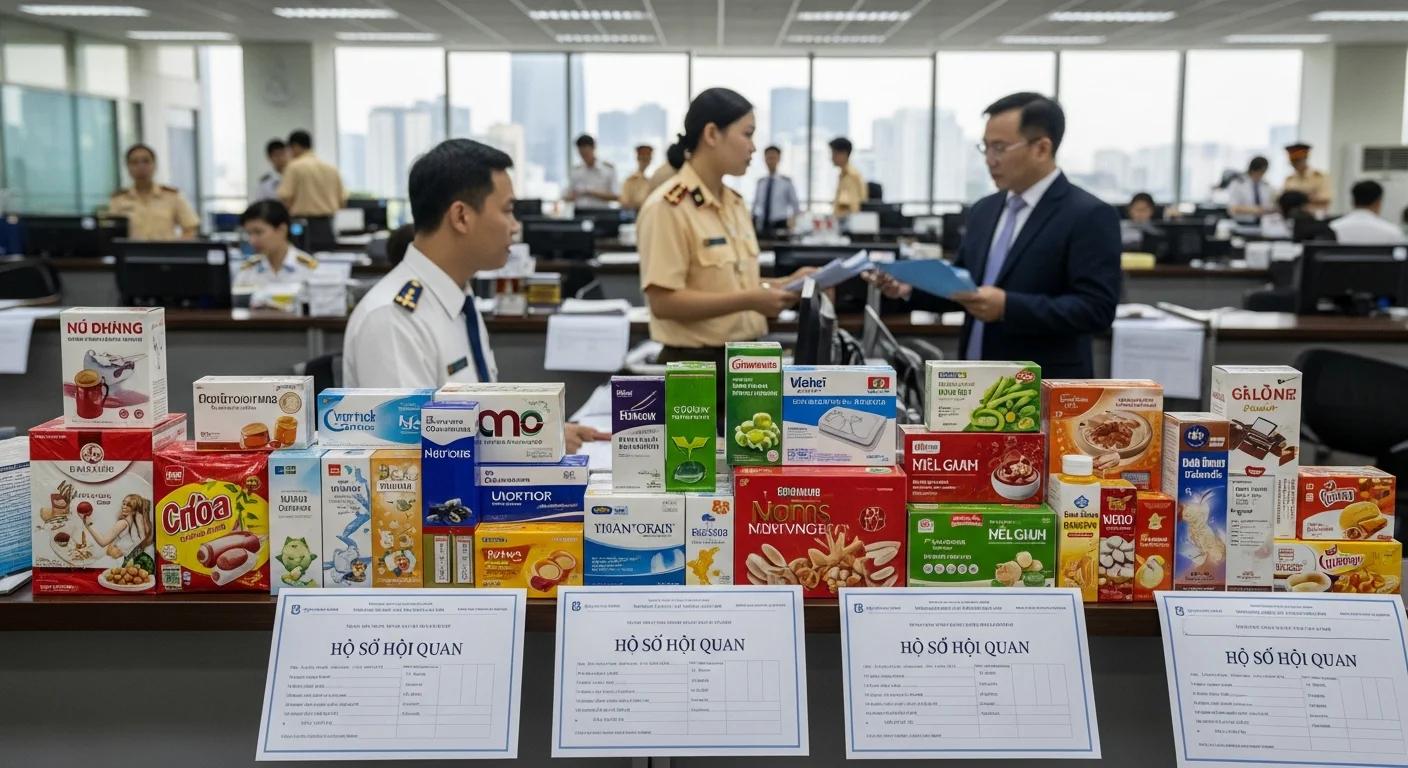
The mandatory product registration process in Vietnam functions as a multi-stage operational filter. On the ground, this manifests as a series of sequential steps, each demanding precision and a deep understanding of local procedures. The mechanism begins with product category identification. Despite the absence of a unified and consistently updated public list of all goods requiring mandatory certification or registration, the general logic points to products that directly impact health, safety, and the environment. These traditionally include specific groups of food products, pharmaceuticals, medical equipment, cosmetics, certain types of electronics, construction materials, and children's products.
Following primary classification, the documentation collection phase begins, which includes providing certificates of origin, laboratory test results, quality protocols, composition data, operating instructions, and manufacturer information. Most of this documentation must be translated into Vietnamese and notarized.
Subsequently, products may require testing in accredited Vietnamese laboratories, even if international certificates already exist. This adds both time and financial costs. Following this, an application is submitted to the relevant regulatory authority (e.g., the Ministry of Health, Ministry of Science and Technology, or Ministry of Industry and Trade), which verifies the provided data and, upon a positive decision, issues an import permit or certificate of conformity.
Logistical operations with uncertified goods are impossible. Products are detained at major transportation hubs, leading to increased storage costs, demurrage, and the risk of quality degradation. Interaction with local authorities demands not only strict adherence to procedures but also a certain understanding of informal aspects of business communication. Risks include not just administrative fines, but also reputational costs capable of undermining consumer and partner trust. This represents a complex operational area with a high cost of error.
THE ECONOMICS OF THE PROCESS
The economics of mandatory registration directly impact a company's ultimate profitability. Profit erosion occurs at several levels. Direct costs include government application fees, laboratory testing payments, translator and notary services, and fees for consultants specializing in regulatory matters. These costs directly increase the unit cost of each product. For example, for some product categories, multi-stage testing can represent a significant portion of the product's value.
Indirect costs often prove more substantial. Delays in obtaining permits or at customs lead to product downtime, incurring storage fees and lost revenue due to untimely market entry. This increases working capital requirements, as funds are tied up in goods that cannot be sold. Should registration issues arise, products may be forcibly returned to the sender or destroyed, resulting in a complete loss of investment in the product and logistics.
From a unit economics perspective, every additional day of downtime or every cost point for certification reduces the margin. If the initial profitability assessment did not account for all regulatory costs, actual profits could be significantly lower than expected, or even result in a loss. Tax obligations, such as import duties and VAT, also depend on the correct documentation and classification of goods. Errors in this process can lead to overpayments or penalties for underpayment. Ultimately, a lack of control over this aspect carries the risk of losing operational control and eroding margins.
AUDITING MODELS
Selecting the optimal market entry model, considering mandatory product registration, requires a systemic analysis of control and risks. Let's examine three main models:
1. Marketplace
This model involves utilizing existing online platforms. At first glance, it appears to be the least costly and quickest route. However, in most cases, responsibility for product compliance with local regulatory requirements falls on the seller. The marketplace may demand all necessary certificates and permits. Their absence or invalidity leads to listing blockage, sales suspension, and potential account loss. Control over the registration process here is minimal, as the seller is forced to resolve these issues independently, often without direct interaction with regulators or full support from the marketplace. The risk lies in dependence on platform policies and a lack of transparency should problems arise.
2. Own Import and Registration
This model entails establishing one's own subsidiary or representative office in Vietnam, which handles imports and independently conducts all registration procedures. This requires significant upfront investment in legal structure, hiring qualified personnel, and developing in-house expertise. However, this model provides maximum operational control. The company directly interacts with government agencies, controls the documentation preparation process, conducts testing, and tracks application statuses. Risks here are primarily associated with the need for deep immersion in local legislation, the lengthy nature of processes, and the potential for errors due to a lack of initial experience. The advantage is building a long-term and sustainable business model with complete control over the entire supply and sales chain.
3. Partnership Model (Local Distributor/Agent)
In this model, the company engages a local partner who assumes the roles of importer and responsibility for navigating all regulatory procedures. The advantage is rapid market entry and minimization of direct operational costs. The partner possesses the necessary experience, connections, and understanding of local realities. However, a key risk is the loss of direct control over the process. Reliance on a partner can lead to delays, opaque costs, and even potential misuse of data or substandard performance of obligations. A meticulous selection of the partner, a legally sound contract, and continuous auditing of their activities are essential. This model demands a high degree of trust and rigorous monitoring.
SOLUTION ALGORITHM
For effective management of the mandatory product registration process in Vietnam, the following algorithm is proposed, focused on a pragmatic approach and risk reduction:
Step 1: Preliminary Product Category Assessment. Begin with a detailed classification of your product according to Vietnamese Harmonized System (HS) codes. Conduct an initial analysis to determine if your product falls into categories traditionally requiring certification or registration (e.g., food products, pharmaceuticals, cosmetics, electronics, children's products). This stage is critically important for budget and timeline planning.
Step 2: Engage Specialized Expertise. Do not attempt to resolve regulatory issues independently without experience. Consult local legal firms or consulting agencies specializing in certification and import in Vietnam. They will provide accurate information on required documents, procedures, timelines, and estimated costs. This is an investment that reduces the risk of costly errors.
Step 3: Comprehensive Documentation Preparation. Gather a complete package of documents from the country of origin: quality certificates, test protocols, composition data, usage instructions, and manufacturer information. Ensure all documents are current, translated into Vietnamese, and, if necessary, legalized or notarized. Every omission at this stage will lead to delays.
Step 4: Pilot Project. Do not scale immediately. Start with a pilot batch of one or a few key products. This will allow you to go through the entire registration cycle in a test mode, identify bottlenecks, evaluate actual costs and timelines, and establish interaction with regulators and logistics operators. Do not begin with exaggerated expectations regarding the speed and simplicity of the process.
Step 5: Build Operational Infrastructure. Based on the pilot experience, develop internal regulations and procedures for future shipments. Determine whether you will create your own certification department or fully delegate these functions to a reliable partner. Establish Key Performance Indicators (KPIs) for this process.
Step 6: Integration and Scaling. Integrate the acquired experience and established processes into your overall market entry strategy and supply chain. Ensure continuous monitoring of legislative changes, as Vietnam's regulatory environment can evolve. Regular auditing and updating of documentation are mandatory to maintain compliance.